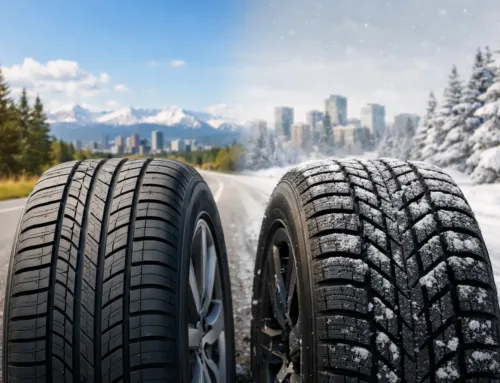
A Calgary morning can start dry, turn icy by lunch, and end under fresh snow. Winter tires are not just for deep snow or mountain trips. They are built to help your vehicle brake, turn, and accelerate predictably when temperatures fall and road conditions change fast.
For daily commuters, family vehicles, rideshare drivers, and work fleets, that predictability matters. A set of proper winter tires can reduce the stress of an unexpected freeze, but only when the tires are correctly selected, installed, and maintained.
Why winter tires work differently
The biggest advantage of a winter tire is not its aggressive-looking tread. It is the rubber compound. Winter tire rubber is engineered to remain flexible in cold temperatures, while many all-season and summer tires become firmer as the thermometer drops. Flexible rubber can conform to the road surface more effectively, creating more grip on cold pavement, packed snow, slush, and ice.
Tread design matters too. Winter tires use deeper channels to move snow and slush away from the contact patch. They also have many small cuts in the tread blocks, called sipes, that create additional biting edges. On a snow-covered road, snow can grip snow surprisingly well. Those edges help the tire hold and release snow as it rolls.
This does not mean winter tires make a vehicle immune to slippery roads. They cannot overcome excessive speed, worn suspension parts, poor visibility, or following too closely. What they provide is a larger margin of control when conditions are working against you.
When to put on winter tires
A practical rule is to install winter tires when daytime temperatures are consistently around 45°F or 7°C and below. In Calgary, that often means booking before the first major cold stretch, rather than waiting for the season’s first snowstorm.
Waiting until roads are fully snow-covered is a common mistake. Cold, dry pavement is enough to reduce the effectiveness of a conventional all-season tire. Installing early also gives you better appointment availability and avoids the rush that follows the first icy commute.
Spring changeover should not happen simply because the snow has melted. Keep winter tires on until temperatures are regularly warmer. Driving a winter compound through prolonged warm weather can make it wear faster and feel less precise, particularly on dry roads. The right timing depends on the season, your driving schedule, and whether your routes include higher elevations or early-morning highway travel.
All-season, all-weather, and winter tires are not the same
These categories are easy to confuse, especially because the names sound similar.
An all-season tire is designed as a compromise for moderate year-round conditions. It can be a sensible choice for drivers in mild climates, but its cold-weather traction is limited compared with a dedicated winter tire. The M+S marking found on many all-season tires refers to a tread classification, not a guarantee of severe-snow performance.
An all-weather tire is intended to offer stronger winter capability while remaining usable through summer. Many carry the three-peak mountain snowflake symbol, which identifies tires that meet a recognized snow-traction standard. For drivers with limited storage, low annual mileage, or mostly urban travel, all-weather tires can be a practical middle ground.
Dedicated winter tires usually deliver the best cold-weather braking and grip, particularly on ice, packed snow, and unplowed streets. The trade-off is that they should be changed out for warmer months and stored properly. If you regularly drive Calgary highways before roads are cleared, transport family members, operate a service vehicle, or head into the mountains, that extra capability is often worthwhile.
Choose winter tires for how you actually drive
The best winter tire is not automatically the most expensive or the most aggressive. Start with the vehicle manufacturer’s approved tire size and load rating. A tire must be capable of safely carrying your vehicle, passengers, cargo, and any equipment you use for work.
From there, think honestly about your routine. A compact commuter car traveling mostly cleared city streets has different needs than a half-ton pickup hauling tools, a delivery van making frequent stops, or an SUV that sees mountain roads every weekend. Fleet vehicles also need a tire choice that balances traction, tread life, availability, and operating cost.
For some vehicles, a slightly narrower winter tire can perform well in snow because it places more pressure on a smaller contact area. That is not a universal upgrade, though. Changing sizes affects clearance, speedometer readings, load capacity, and handling. It is worth getting professional advice before moving away from the factory-recommended fitment.
Wheel choice matters as well. A dedicated set of winter wheels makes seasonal swaps faster and helps protect your nicer summer wheels from road salt, gravel, and pothole damage. Steel wheels are a cost-conscious option for many drivers. Alloy wheels can also work well if they are correctly sized and maintained.
Install four matching tires, not just two
Winter tires should be installed as a complete set of four. Putting two winter tires on only the drive axle may improve acceleration, but it can leave the other axle with much less grip. That imbalance can make the vehicle more likely to slide or rotate unexpectedly during braking and cornering.
This is especially relevant for front-wheel-drive vehicles. Two winter tires on the front may help the vehicle pull away from a stop, yet the rear can still lose traction in a turn. On rear-wheel-drive vehicles, two tires may help acceleration while reducing steering confidence. Four matching tires create more balanced handling and give stability systems a better foundation to work with.
All-wheel drive is helpful for getting moving, but it does not improve stopping distance on its own. AWD can create a false sense of security because the vehicle accelerates well on slippery roads. Every vehicle relies on its tires to brake and turn.
Tread depth and tire age matter
A winter tire can look acceptable and still be past its best. New winter tires generally begin with deeper tread than standard all-season tires because they need room for snow and slush evacuation. As tread wears down, the tire loses the biting edges and channels that make it effective.
Many shops recommend considering replacement of winter tires around 5/32 inch of remaining tread, even though a tire may still be above the legal minimum. The legal minimum is not the same as strong winter performance. If your tires are approaching that point before the season begins, replacing them is usually the safer choice than trying to get through one more winter.
Age is another factor. Rubber changes over time, even if the tread appears deep. Check the DOT date code on the sidewall and inspect for cracking, bulges, uneven wear, and repeated air loss. Tires that are old, damaged, or hardened will not provide the grip you expect from a winter-rated product.
Get the rest of the vehicle ready too
Tires do the hard work at the road surface, but the systems around them affect how safely that grip is used. Before winter, check tire pressure, battery condition, brakes, wiper blades, lights, and fluid levels. Cold temperatures lower tire pressure, and an underinflated tire can wear unevenly, feel vague, and reduce fuel economy.
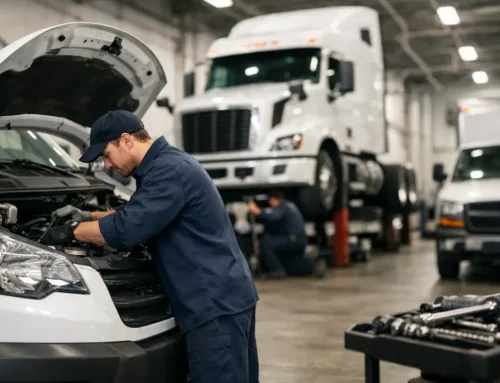
An alignment inspection is also valuable if your vehicle pulls, the steering wheel is off-center, or the previous tires wore unevenly. Suspension wear and poor alignment can shorten the life of a new tire set quickly. For commercial vehicles, routine inspections help prevent a small tire or alignment issue from becoming expensive downtime.
After installation, recheck wheel torque after the recommended break-in period. Keep tire pressures set to the vehicle placard specification, not the maximum pressure printed on the tire sidewall. Rotating tires at the proper interval helps manage wear, although the correct rotation pattern depends on whether the tires are directional, staggered, or the same size front to rear.
Driving habits still matter
The best winter tires cannot compensate for summer driving habits. Leave more following distance, brake earlier, and make steering inputs smoothly. If your vehicle starts to slide, looking where you want to go and avoiding sudden corrections gives the tires the best chance to regain traction.
Pay attention to conditions that are easy to underestimate: bridge decks, shaded intersections, parking lots, and roads that look merely wet when temperatures hover near freezing. Black ice often gives little warning. Slowing down before the problem is far more effective than trying to react after traction is gone.
At Beyond Auto Performance, the goal is straightforward: help you choose a tire setup that fits your vehicle, budget, and real driving conditions, then install it correctly so you can rely on it when the weather turns. Book before the first major freeze, and give yourself one less thing to worry about on the next winter commute.